Buy greekreports.eu ?
We are moving the project
greekreports.eu .
Are you interested in purchasing the domain
greekreports.eu ?
domain@kv-gmbh.de · 0541-91531010
Buy greekreports.eu ?
What is the difference between civil society politics and pluralistic society politics?
Civil society politics refers to the participation of non-governmental organizations, community groups, and individuals in the political process to advocate for social change and public policy reform. This type of politics focuses on grassroots activism and often involves issues related to human rights, environmental protection, and social justice. On the other hand, pluralistic society politics refers to the political system in which power is dispersed among various competing interest groups, such as political parties, business organizations, and labor unions. In a pluralistic society, different groups with diverse interests and ideologies compete for influence and power within the political system. The key difference between civil society politics and pluralistic society politics lies in the actors involved and the nature of their engagement in the political process. Civil society politics emphasizes the role of non-state actors in advocating for social change, while pluralistic society politics focuses on the competition and negotiation among various interest groups within the political system. **
What is the difference between politics and history?
Politics refers to the activities, actions, and policies that govern a society, including the decision-making processes and power dynamics within a government or organization. On the other hand, history is the study of past events, people, and societies, focusing on understanding the causes and effects of these events over time. While politics is concerned with current affairs and shaping the future, history looks back at the past to provide context and insights into how societies have evolved. Ultimately, politics is about the present and future governance of a society, while history is about understanding the past to inform the present and future. **

Similar search terms for Difference
Top-Angebote
Products related to Difference:
-
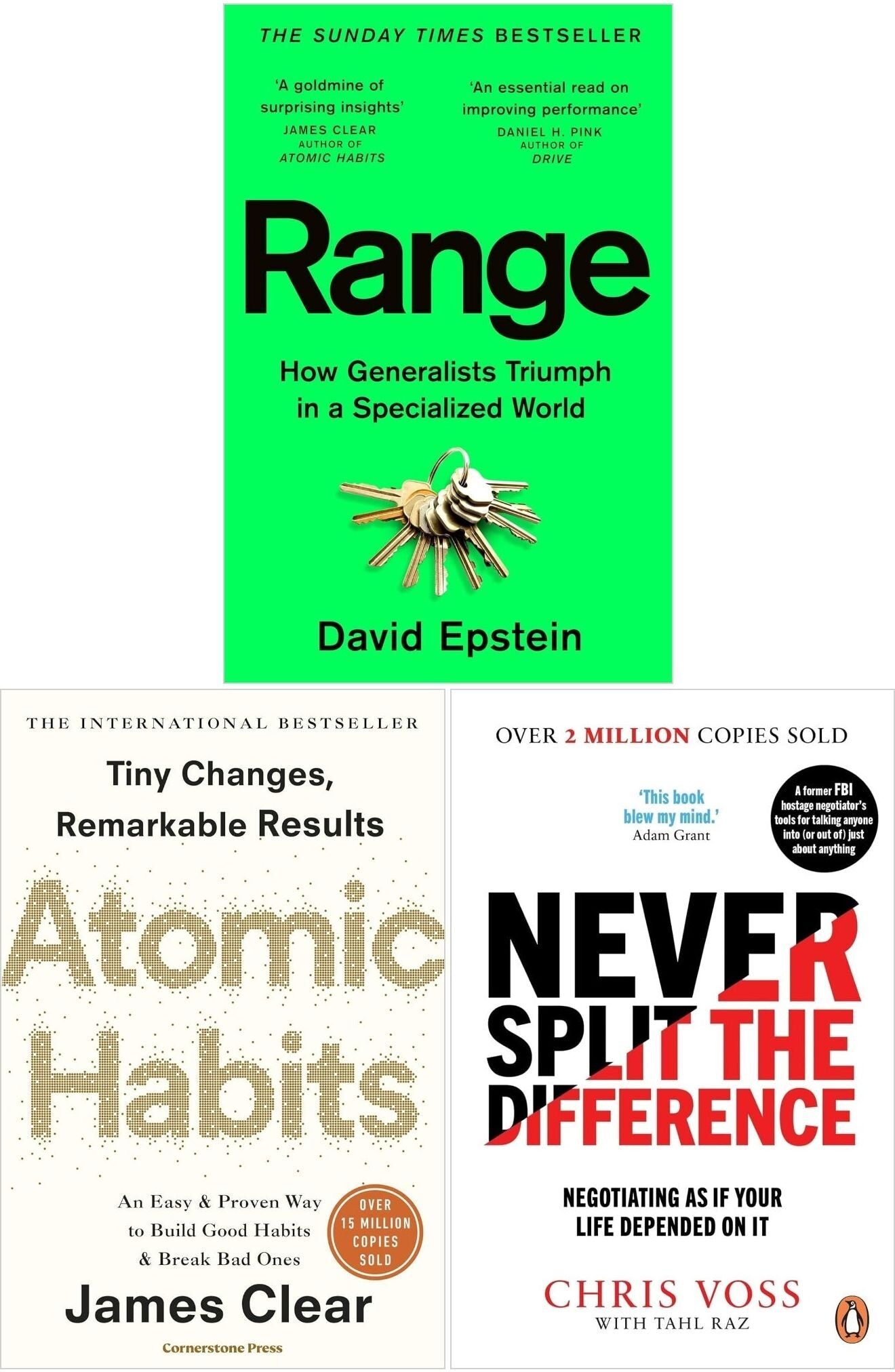
Penguin Never Split the Difference: Negotiating as if Your Life Depended on ItA former FBI hostage negotiator offers a new, field-tested approach to - effective in any situation.'Riveting' Adam Grant'Stupendous' The Week'Brilliant' GuardianAfter a stint policing the rough streets of Kansas City, Missouri, Chris Voss joined the FBI, where his career as a kidnapping negotiator brought him face-to-face with bank robbers, gang leaders and terrorists. Never Split the Difference takes you inside his world of high-stakes negotiations, revealing the nine key principles that helped Voss and his colleagues succeed when it mattered the most - when people's lives were at stake.Rooted in the real-life experiences of an intelligence professional at the top of his game, Never Split the Difference will give you the competitive edge in any discussion. PRAISE FOR NEVER SPLIT THE DIFFERENCE'My pick for book of the year.' Forbes'Who better to learn [negotiation] from than Chris Voss, whose skills have saved lives and averted disaster?' Daily Mail'Filled with insights that apply to everyday negotiations.' Business Insider'It's rare that a book is so gripping and entertaining while still being actionable and applicable.' Inc.'A business book you won't be able to put down.' Fortune7,99 £*Shipping: 2,99 £Secure redirect to the provider
-
Random House Books/Vermilion Never Split the Difference and Atomic Habits 2 Books Collection SetNever Split the Difference and Atomic Habits 2 Books Collection Set Description Never Split the Difference: Negotiating as if Your Life Depended on It THE HUGE INTERNATIONAL BESTSELLERA former FBI hostage negotiator offers a field-tested approach to negotiating - effective in any situation. 'Riveting' Adam Grant'Stupendous' The Week'Brilliant' After a stint policing the rough streets of Kansas City, Missouri, Chris Voss joined the FBI, where his career as a kidnapping negotiator brought him face-to-face with bank robbers, gang leaders and terrorists. Never Split the Difference takes you inside his world of high-stakes negotiations, revealing the nine key principles that helped Voss and his colleagues succeed when it mattered the most - when people's lives were at stake. Rooted in the real-life experiences of an intelligence professional at the top of his game, Never Split the Difference will give you the competitive edge in any discussion PRAISE FOR NEVER SPLIT THE DIFFERENCE'Such a great book that is relevant to more than just FBI negotiations: it's relevant to my relationship with my partner, to my business, to everything in between.' Steven Bartlett, entrepreneur and host of the Diary of a CEO podcast'It's rare that a book is so gripping and entertaining while still being actionable and applicable.' Inc. 'A business book you won't be able to put down.' Fortune Atomic Habits: the life-changing million-copy #1 bestseller THE PHENOMENAL INTERNATIONAL BESTSELLER: OVER 15 MILLION COPIES SOLD WORLDWIDETransform your life with tiny changes in behaviour, starting now. People think that when you want to change your life, you need to think big. But world-renowned habits expert James Clear has discovered another way. He knows that real change comes from the compound effect of hundreds of small decisions: doing two push-ups a day, waking up five minutes early, or holding a single short phone call. He calls them atomic habits. In this ground-breaking book, Clears reveals exactly how these minuscule changes can grow into such life-altering outcomes. He uncovers a handful of simple life hacks (the forgotten art of Habit Stacking, the unexpected power of the Two Minute Rule, or the trick to entering the Goldilocks Zone), and delves into cutting-edge psychology and neuroscience to explain why they matter. Along the way, he tells inspiring stories of Olympic gold medalists, leading CEOs, and distinguished scientists who have used the science of tiny habits to stay productive, motivated, and happy. These small changes will have a revolutionary effect on your career, your relationships, and your life.14,99 £*Shipping: 2,99 £Secure redirect to the provider
-
Inspired Finds Reusable Find The Difference Game Wipe Clean Activity Cards For Kids Focus And Attention Training primaryThese reusable wipeclean cards turn quiet time into a confidencebuilding challenge that kids actually enjoy. Designed as an attention training game, each page invites children to spot mistakes, differences, or hidden details while practicing...34,99 $*Shipping: 0,00 $Secure redirect to the provider
-
From the Archives: Black History and Culture Value PackThis brand-new series is rooted in a profound commitment to shedding light on some of the important -- and often lesser-known -- aspects of Black history. From the Archives features landmarks, events, people, and artistic endeavors that have played...26,99 $*Shipping: 0,00 $Secure redirect to the provider




-
What is the difference between low culture and high culture in history?
Low culture refers to the cultural activities and products that are considered to be more common, popular, and easily accessible to the general public. This can include things like popular music, television shows, and mass-produced literature. On the other hand, high culture refers to the cultural activities and products that are considered to be more refined, sophisticated, and often associated with the elite or educated classes. This can include things like classical music, fine art, and literature that is considered to be more intellectually challenging. The distinction between low and high culture has been a source of debate and has evolved over time, but it generally reflects the social and class divisions within a society. **
-
What is the relationship between society, economy, and politics?
The relationship between society, economy, and politics is complex and interdependent. Society shapes the economy and politics through its values, beliefs, and behaviors. The economy provides the resources and infrastructure that support society and political systems. Politics, in turn, influences the distribution of resources and the rules that govern economic activity, which in turn affects society. These three elements are interconnected and constantly influence and shape each other in a dynamic way. **
-
What is a current topic about politics, economy, and society?
One current topic about politics, economy, and society is the global response to the COVID-19 pandemic. Governments around the world are implementing various policies to address the public health crisis, support their economies, and mitigate the social impact of the pandemic. This includes measures such as vaccine distribution, economic stimulus packages, and social welfare programs. The pandemic has also highlighted existing inequalities within societies and has sparked discussions about the need for more inclusive and sustainable economic and social systems. **
-
What is the difference between a class society, a stratified society, and a milieu society in relation to politics?
A class society is characterized by distinct social classes with unequal access to resources and power, leading to a hierarchical structure where the ruling class dominates political decision-making. In contrast, a stratified society may have social hierarchies based on various factors like wealth, education, or occupation, but these hierarchies may not directly translate into political power dynamics. A milieu society, on the other hand, is more fluid and decentralized, with individuals and groups interacting across various social spheres without rigid class or stratification boundaries, leading to a more diverse and dynamic political landscape. **
What is the difference between a class society, a stratified society, and a milieu society in terms of politics?
A class society is characterized by a clear hierarchy based on economic and social status, where power and resources are concentrated in the hands of a few elite classes. In contrast, a stratified society has multiple layers of social hierarchy based on various factors such as wealth, education, and occupation, with more fluid boundaries between these layers. A milieu society, on the other hand, is characterized by a more decentralized and diverse social structure, where power and influence are dispersed among various groups and individuals, leading to a more complex and fragmented political landscape. **
What is the difference between historical culture and memory culture?
Historical culture refers to the collective understanding and interpretation of historical events, traditions, and customs within a society. It encompasses the tangible and intangible aspects of a society's past, including artifacts, monuments, and rituals. Memory culture, on the other hand, focuses on the ways in which a society actively engages with and remembers its history. It involves the processes of commemoration, memorialization, and the transmission of historical knowledge through storytelling, education, and public discourse. While historical culture is the broader framework of a society's historical identity, memory culture is the active, dynamic practice of remembering and interpreting that history. **
Top-Angebote
Products related to Difference:
-
Thirstystone Make a Difference 4 Pack Tumbled Tile CoasterABSORBENT STONE-Coasters arrive as a set of 4 Coasters. Each Coaster is constructed of absorbent stone that continuously absorbs drips and condensation from your beverages while preventing stains and rings on your furniture.29,99 $*Shipping: 0,00 $Secure redirect to the provider
-
Penguin Range, Never Split the Difference and Atomic Habits 3 Books SetRange In this landmark book, David Epstein shows you that the way to succeed is by sampling widely, gaining a breadth of experiences, taking detours, experimenting relentlessly, juggling many interests – in other words, by developing range. Studying the world's most successful athletes, artists, musicians, inventors and scientists, Epstein demonstrates why in most fields – especially those that are complex and unpredictable – generalists, not specialists are primed to excel. No matter what you do, where you are in life, whether you are a teacher, student, scientist, business analyst, parent, job hunter, retiree, you will see the world differently after you've read Range. You'll understand better how we solve problems, how we learn and how we succeed. You'll see why failing a test is the best way to learn and why frequent quitters end up with the most fulfilling careers. Never Split the Difference After a stint policing the rough streets of Kansas City, Missouri, Chris Voss joined the FBI, where his career as a kidnapping negotiator brought him face-to-face with bank robbers, gang leaders and terrorists. Never Split the Difference takes you inside his world of high-stakes negotiations, revealing the nine key principles that helped Voss and his colleagues succeed when it mattered the most - when people's lives were at stake. Rooted in the real-life experiences of an intelligence professional at the top of his game, Never Split the Difference will give you the competitive edge in any discussion. Atomic Habits Transform your life with tiny changes in behaviour, starting now. People think that when you want to change your life, you need to think big. But world-renowned habits expert James Clear has discovered another way. He knows that real change comes from the compound effect of hundreds of small decisions: doing two push-ups a day, waking up five minutes early, or holding a single short phone call. He calls them atomic habits. In this ground-breaking book, Clears reveals exactly how these minuscule changes can grow into such life-altering outcomes.14,99 £*Shipping: 2,99 £Secure redirect to the provider
-
Penguin Never Split the Difference: Negotiating as if Your Life Depended on ItA former FBI hostage negotiator offers a new, field-tested approach to - effective in any situation.'Riveting' Adam Grant'Stupendous' The Week'Brilliant' GuardianAfter a stint policing the rough streets of Kansas City, Missouri, Chris Voss joined the FBI, where his career as a kidnapping negotiator brought him face-to-face with bank robbers, gang leaders and terrorists. Never Split the Difference takes you inside his world of high-stakes negotiations, revealing the nine key principles that helped Voss and his colleagues succeed when it mattered the most - when people's lives were at stake.Rooted in the real-life experiences of an intelligence professional at the top of his game, Never Split the Difference will give you the competitive edge in any discussion. PRAISE FOR NEVER SPLIT THE DIFFERENCE'My pick for book of the year.' Forbes'Who better to learn [negotiation] from than Chris Voss, whose skills have saved lives and averted disaster?' Daily Mail'Filled with insights that apply to everyday negotiations.' Business Insider'It's rare that a book is so gripping and entertaining while still being actionable and applicable.' Inc.'A business book you won't be able to put down.' Fortune7,99 £*Shipping: 2,99 £Secure redirect to the provider
-
Random House Books/Vermilion Never Split the Difference and Atomic Habits 2 Books Collection SetNever Split the Difference and Atomic Habits 2 Books Collection Set Description Never Split the Difference: Negotiating as if Your Life Depended on It THE HUGE INTERNATIONAL BESTSELLERA former FBI hostage negotiator offers a field-tested approach to negotiating - effective in any situation. 'Riveting' Adam Grant'Stupendous' The Week'Brilliant' After a stint policing the rough streets of Kansas City, Missouri, Chris Voss joined the FBI, where his career as a kidnapping negotiator brought him face-to-face with bank robbers, gang leaders and terrorists. Never Split the Difference takes you inside his world of high-stakes negotiations, revealing the nine key principles that helped Voss and his colleagues succeed when it mattered the most - when people's lives were at stake. Rooted in the real-life experiences of an intelligence professional at the top of his game, Never Split the Difference will give you the competitive edge in any discussion PRAISE FOR NEVER SPLIT THE DIFFERENCE'Such a great book that is relevant to more than just FBI negotiations: it's relevant to my relationship with my partner, to my business, to everything in between.' Steven Bartlett, entrepreneur and host of the Diary of a CEO podcast'It's rare that a book is so gripping and entertaining while still being actionable and applicable.' Inc. 'A business book you won't be able to put down.' Fortune Atomic Habits: the life-changing million-copy #1 bestseller THE PHENOMENAL INTERNATIONAL BESTSELLER: OVER 15 MILLION COPIES SOLD WORLDWIDETransform your life with tiny changes in behaviour, starting now. People think that when you want to change your life, you need to think big. But world-renowned habits expert James Clear has discovered another way. He knows that real change comes from the compound effect of hundreds of small decisions: doing two push-ups a day, waking up five minutes early, or holding a single short phone call. He calls them atomic habits. In this ground-breaking book, Clears reveals exactly how these minuscule changes can grow into such life-altering outcomes. He uncovers a handful of simple life hacks (the forgotten art of Habit Stacking, the unexpected power of the Two Minute Rule, or the trick to entering the Goldilocks Zone), and delves into cutting-edge psychology and neuroscience to explain why they matter. Along the way, he tells inspiring stories of Olympic gold medalists, leading CEOs, and distinguished scientists who have used the science of tiny habits to stay productive, motivated, and happy. These small changes will have a revolutionary effect on your career, your relationships, and your life.14,99 £*Shipping: 2,99 £Secure redirect to the provider
-
What is the difference between civil society politics and pluralistic society politics?
Civil society politics refers to the participation of non-governmental organizations, community groups, and individuals in the political process to advocate for social change and public policy reform. This type of politics focuses on grassroots activism and often involves issues related to human rights, environmental protection, and social justice. On the other hand, pluralistic society politics refers to the political system in which power is dispersed among various competing interest groups, such as political parties, business organizations, and labor unions. In a pluralistic society, different groups with diverse interests and ideologies compete for influence and power within the political system. The key difference between civil society politics and pluralistic society politics lies in the actors involved and the nature of their engagement in the political process. Civil society politics emphasizes the role of non-state actors in advocating for social change, while pluralistic society politics focuses on the competition and negotiation among various interest groups within the political system. **
-
What is the difference between politics and history?
Politics refers to the activities, actions, and policies that govern a society, including the decision-making processes and power dynamics within a government or organization. On the other hand, history is the study of past events, people, and societies, focusing on understanding the causes and effects of these events over time. While politics is concerned with current affairs and shaping the future, history looks back at the past to provide context and insights into how societies have evolved. Ultimately, politics is about the present and future governance of a society, while history is about understanding the past to inform the present and future. **
-
What is the difference between low culture and high culture in history?
Low culture refers to the cultural activities and products that are considered to be more common, popular, and easily accessible to the general public. This can include things like popular music, television shows, and mass-produced literature. On the other hand, high culture refers to the cultural activities and products that are considered to be more refined, sophisticated, and often associated with the elite or educated classes. This can include things like classical music, fine art, and literature that is considered to be more intellectually challenging. The distinction between low and high culture has been a source of debate and has evolved over time, but it generally reflects the social and class divisions within a society. **
-
What is the relationship between society, economy, and politics?
The relationship between society, economy, and politics is complex and interdependent. Society shapes the economy and politics through its values, beliefs, and behaviors. The economy provides the resources and infrastructure that support society and political systems. Politics, in turn, influences the distribution of resources and the rules that govern economic activity, which in turn affects society. These three elements are interconnected and constantly influence and shape each other in a dynamic way. **
Similar search terms for Difference
-
Inspired Finds Reusable Find The Difference Game Wipe Clean Activity Cards For Kids Focus And Attention Training primaryThese reusable wipeclean cards turn quiet time into a confidencebuilding challenge that kids actually enjoy. Designed as an attention training game, each page invites children to spot mistakes, differences, or hidden details while practicing...34,99 $*Shipping: 0,00 $Secure redirect to the provider
-
From the Archives: Black History and Culture Value PackThis brand-new series is rooted in a profound commitment to shedding light on some of the important -- and often lesser-known -- aspects of Black history. From the Archives features landmarks, events, people, and artistic endeavors that have played...26,99 $*Shipping: 0,00 $Secure redirect to the provider
-
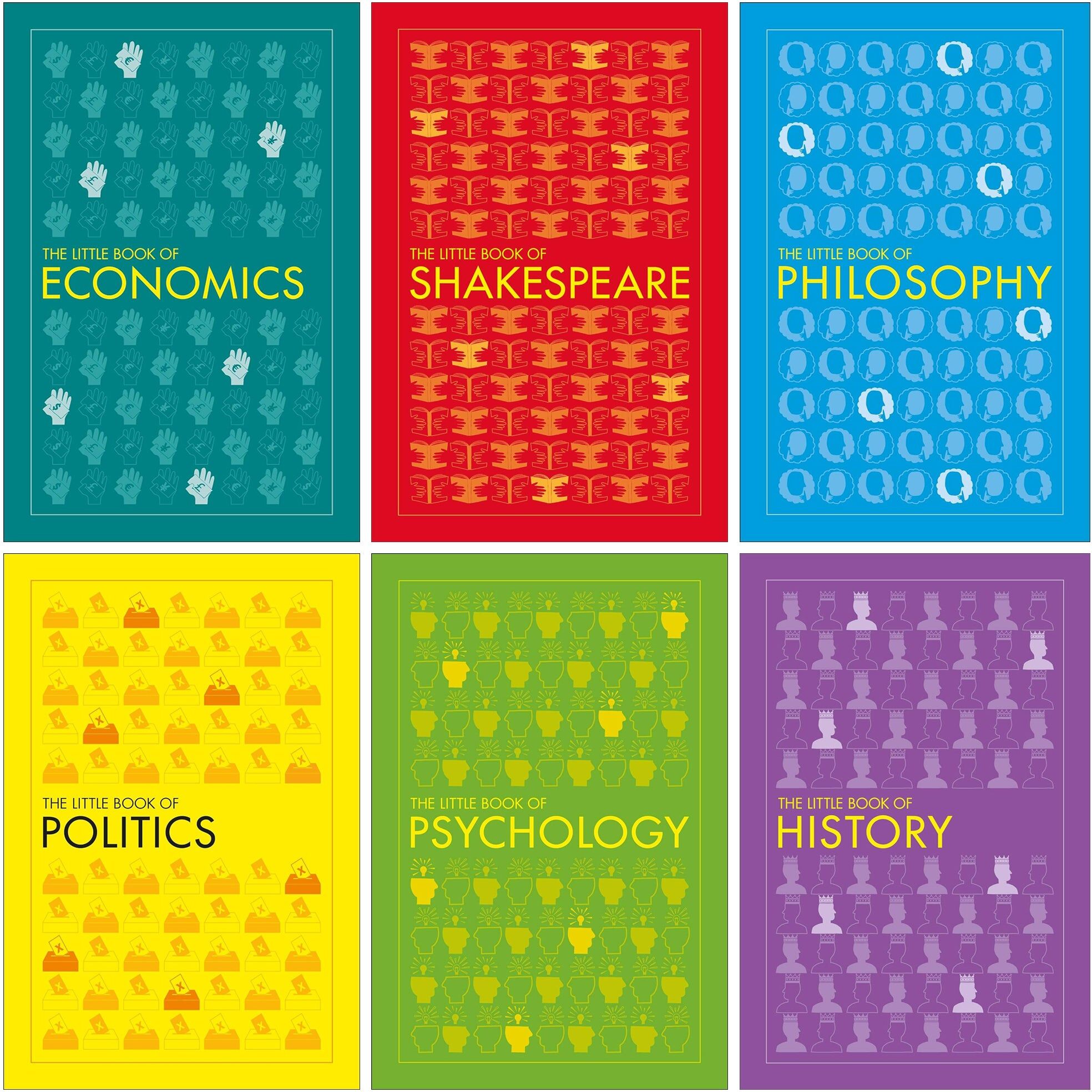
DK The Little Book Of Series 6 Books Collection Set (Economics, Politics, Shakespeare, Philosophy, Psychology, History)The Little Book Of Economics From the earliest forms of currency to the Industrial Revolution, and from the birth of the stock market to free-market capitalism and globalized trade, The Little Book of Economics brings economic theory and the work of key economists to life. Journeying through centuries of economic thought, it is the perfect pocket-sized guide to the subject. The Little Book Of Politics From the origins of democracy to Machiavelli's cunning statecraft, and from Rousseau's "social contract" to the American Declaration of Independence, Marxist communism, the dawn of populism, and identity politics, The Little Book of Politics examines the philosophies behind the different political beliefs and methods of government used around the world over the course of human history. The Little Book Of Shakespeare This bold book covers every work, from the comedies of Twelfth Night and As You Like It to the tragedies of Julius Caesar and Hamlet, plus lost plays and less well-known works of poetry. Easy-to-understand graphics and illustrations bring the themes, plots, characters and language of Shakespeare to life, including illustrated timelines which offer an at-a-glance summary of the action for each play. With detailed plot summaries and an in-depth analysis of the major characters and themes, this is a brilliant, innovative exploration of the entire canon of Shakespeare plays, sonnets and poetry. The Little Book Of Philosophy To the complete novice learning about philosophy can be daunting - The Little Book of Philosophy changes all that. With the use of powerful and easy-to-follow images, famous quotations, and explanations that are easily understandable, this book cuts through any misunderstandings to demystify the subject. The Little Book Of Psychology DK's The Little Book of Psychology answers all these questions and provides an insight into this fascinating field of science. Whether you are a student, an expert, a novice, or have a general interest in the human mind, this portable guide is the perfect choice to start exploring and understanding psychology. The Little Book Of History The Little Book of History charts world history from the dawn of civilisation to the modern culture we live in today. From the origins of homo-sapiens to the release of Nelson Mandela, from the French Revolution to the Space Race, The Little Book of History is a stunning exploration of the human timeline up to and including modern Islam, the world wide web, and the global financial crisis.14,99 £*Shipping: 2,99 £Secure redirect to the provider
-
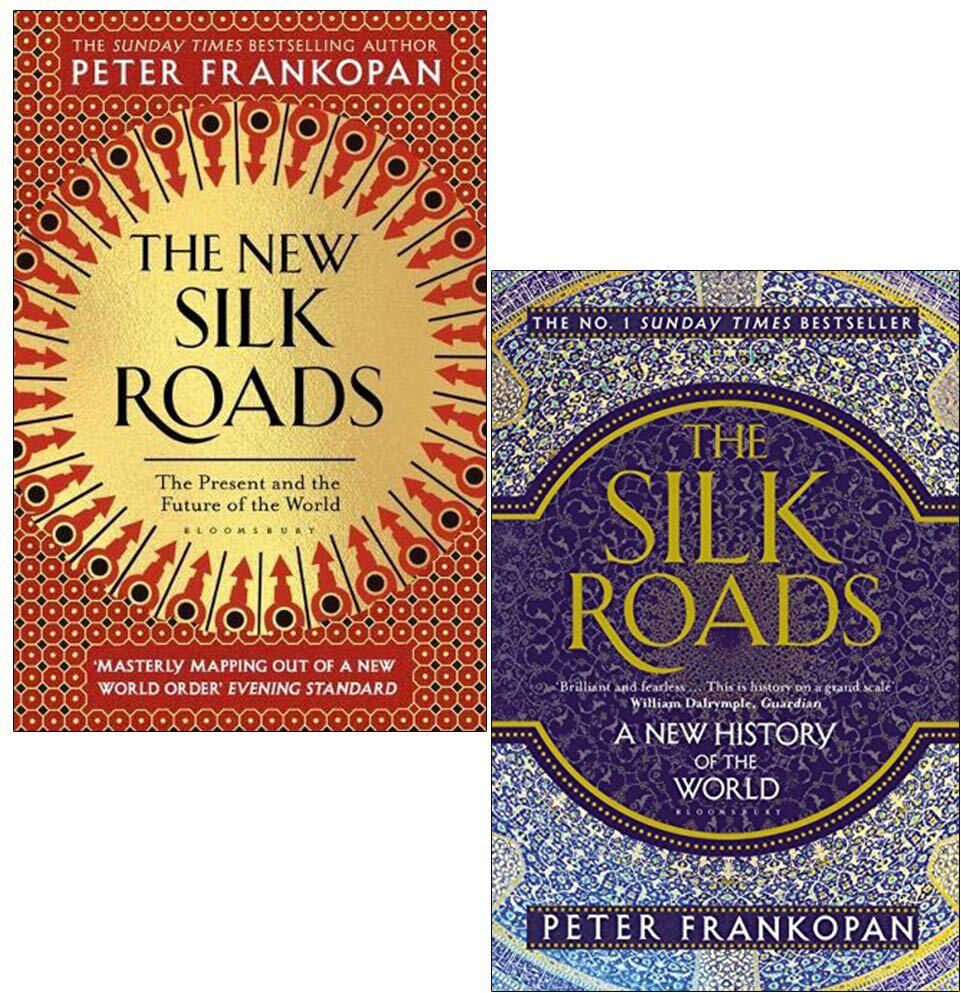
Bloomsbury Publishing The Silk Roads & The New Silk Roads 2 Book Set by Peter Frankopan – History & Global Politics CollectionThe New Silk Roads The Present and Future of the World The New Silk Roads takes a fresh look at the relationships being formed along the length and breadth of the ancient trade routes today. The world is changing dramatically and in an age of Brexit and Trump; the themes of isolation and fragmentation permeating the western world stand in sharp contrast to events along the Silk Roads; where ties are being strengthened and mutual cooperation established.This prescient contemporary history provides a timely reminder that we live in a world that is profoundly interconnected. The Silk Roads: A New History of the World For centuries; fame and fortune were to be found in the west in the New World of the Americas. Today; it is the east which calls out to those in search of riches and adventure. Sweeping right across Central Asia and deep into China and India; a region that once took centre stage is again rising to dominate global politics; commerce and culture.16,98 £*Shipping: 2,99 £Secure redirect to the provider
-
What is a current topic about politics, economy, and society?
One current topic about politics, economy, and society is the global response to the COVID-19 pandemic. Governments around the world are implementing various policies to address the public health crisis, support their economies, and mitigate the social impact of the pandemic. This includes measures such as vaccine distribution, economic stimulus packages, and social welfare programs. The pandemic has also highlighted existing inequalities within societies and has sparked discussions about the need for more inclusive and sustainable economic and social systems. **
-
What is the difference between a class society, a stratified society, and a milieu society in relation to politics?
A class society is characterized by distinct social classes with unequal access to resources and power, leading to a hierarchical structure where the ruling class dominates political decision-making. In contrast, a stratified society may have social hierarchies based on various factors like wealth, education, or occupation, but these hierarchies may not directly translate into political power dynamics. A milieu society, on the other hand, is more fluid and decentralized, with individuals and groups interacting across various social spheres without rigid class or stratification boundaries, leading to a more diverse and dynamic political landscape. **
-
What is the difference between a class society, a stratified society, and a milieu society in terms of politics?
A class society is characterized by a clear hierarchy based on economic and social status, where power and resources are concentrated in the hands of a few elite classes. In contrast, a stratified society has multiple layers of social hierarchy based on various factors such as wealth, education, and occupation, with more fluid boundaries between these layers. A milieu society, on the other hand, is characterized by a more decentralized and diverse social structure, where power and influence are dispersed among various groups and individuals, leading to a more complex and fragmented political landscape. **
-
What is the difference between historical culture and memory culture?
Historical culture refers to the collective understanding and interpretation of historical events, traditions, and customs within a society. It encompasses the tangible and intangible aspects of a society's past, including artifacts, monuments, and rituals. Memory culture, on the other hand, focuses on the ways in which a society actively engages with and remembers its history. It involves the processes of commemoration, memorialization, and the transmission of historical knowledge through storytelling, education, and public discourse. While historical culture is the broader framework of a society's historical identity, memory culture is the active, dynamic practice of remembering and interpreting that history. **
* All prices are inclusive of VAT and, if applicable, plus shipping costs. The offer information is based on the details provided by the respective shop and is updated through automated processes. Real-time updates do not occur, so deviations can occur in individual cases. ** Note: Parts of this content were created by AI.